Newcastle University
Computer Science BSc
2024 — Ongoing
- Stage 1 overall average: 79.9%
- Stage 2 overall average: 82.8%
I build things from the metal up.
I'm a Computer Science student at Newcastle University who bounces between low-level systems work and shipping products people actually use — emulators and physics engines in C on one end, full-stack apps running a real business on the other. Right now I'm building a real-time gravity simulation in C and OpenGL.
Hello! I'm Lovin. I'm really interested in figuring out how things work — especially how the low-level pieces stack up into something a person can actually open and use. Writing a CHIP-8 interpreter and building a rota system that's actively used by a restaurant are the same curiosity pointed at opposite ends of the stack.
I'm studying Computer Science BSc at Newcastle University, where I averaged 79.9% in Stage 1 and 82.8% in Stage 2. Alongside my degree I work as a Mobile Tech Guide at BT Group — EE, and I've spent time tutoring, and analysing particle collision data at the Institute for Particle Physics Phenomenology in Durham.
Most of what I build is either for someone specific — an attendance tracker for a South Indian dance company, a scheduling PWA for a restaurant — or an excuse to understand a layer I haven't touched yet. Both keep me writing efficient code and constantly improving.
Here are a few technologies I've been working with recently:
Lovin Sharma. Studying Computer Science BSc at Newcastle University. Mobile Tech Guide at EE. Speaks English, Hindi, Punjabi and Urdu.
April 2025 — Present · Cobalt Business Park, Newcastle
August 2022 — April 2025 · Kingston Park, Newcastle
June 2023 — July 2023 · Durham
Computer Science BSc
2024 — Ongoing
A-Levels
2023 — 2024
Featured Project
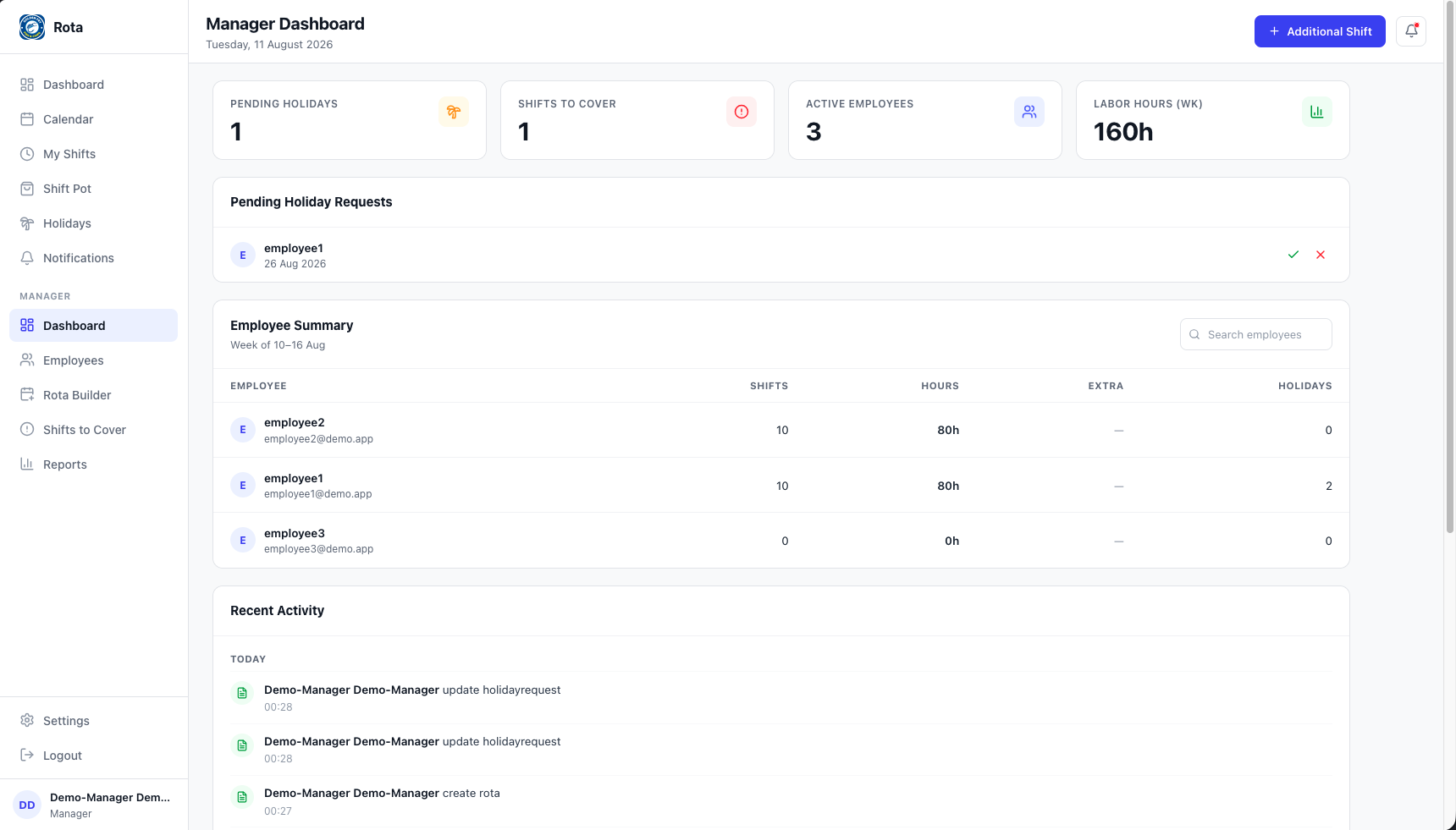
A full-stack Progressive Web App for managing employee schedules, actively used by a restaurant business. Managers build and publish weekly rotas on a drag-and-drop grid, track labour hours, and approve holiday requests; employees claim open shifts from a shift pot, swap cover, and see everything on a colour-coded calendar. JWT access and refresh token auth, role-based Manager and Employee views, and installable on mobile.
Featured Project
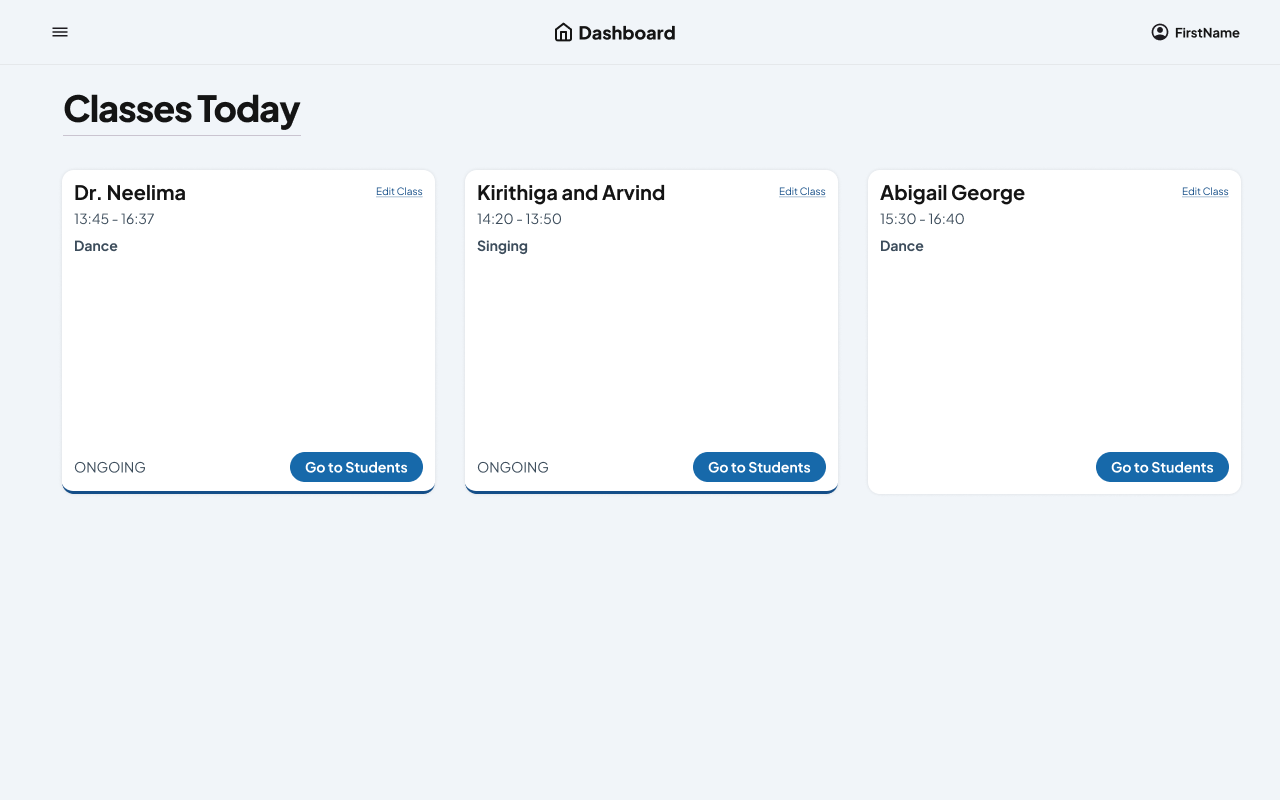
An Android app built to track student attendance for a South Indian dance company, replacing a paper sign-in sheet. Staff sign students in and out in a couple of taps and see who is in the building live. Backed by a real-time PostgreSQL database with GDPR-compliant handling of children's data throughout.
Featured Project
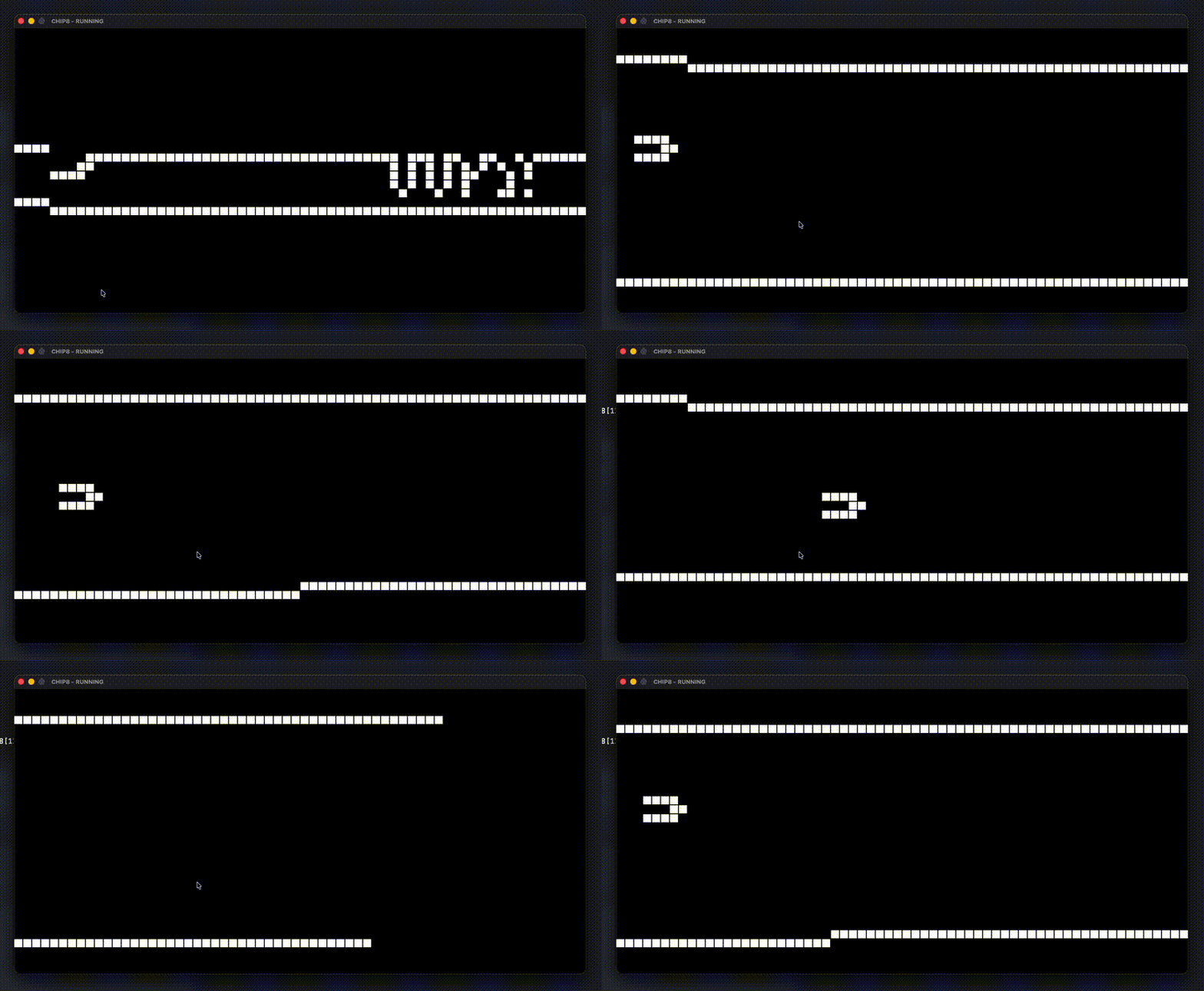
A CHIP-8 interpreter written from scratch in C and rendered with SDL2 — all 35 opcodes, the 64×32 monochrome display, the 16-key hex keypad and both 60 Hz timers. Runs a configurable instruction budget per frame (700 IPS by default), detects stack overflow and underflow rather than corrupting memory, and ships a debug build that disassembles every executed instruction with live registers.
Featured Project
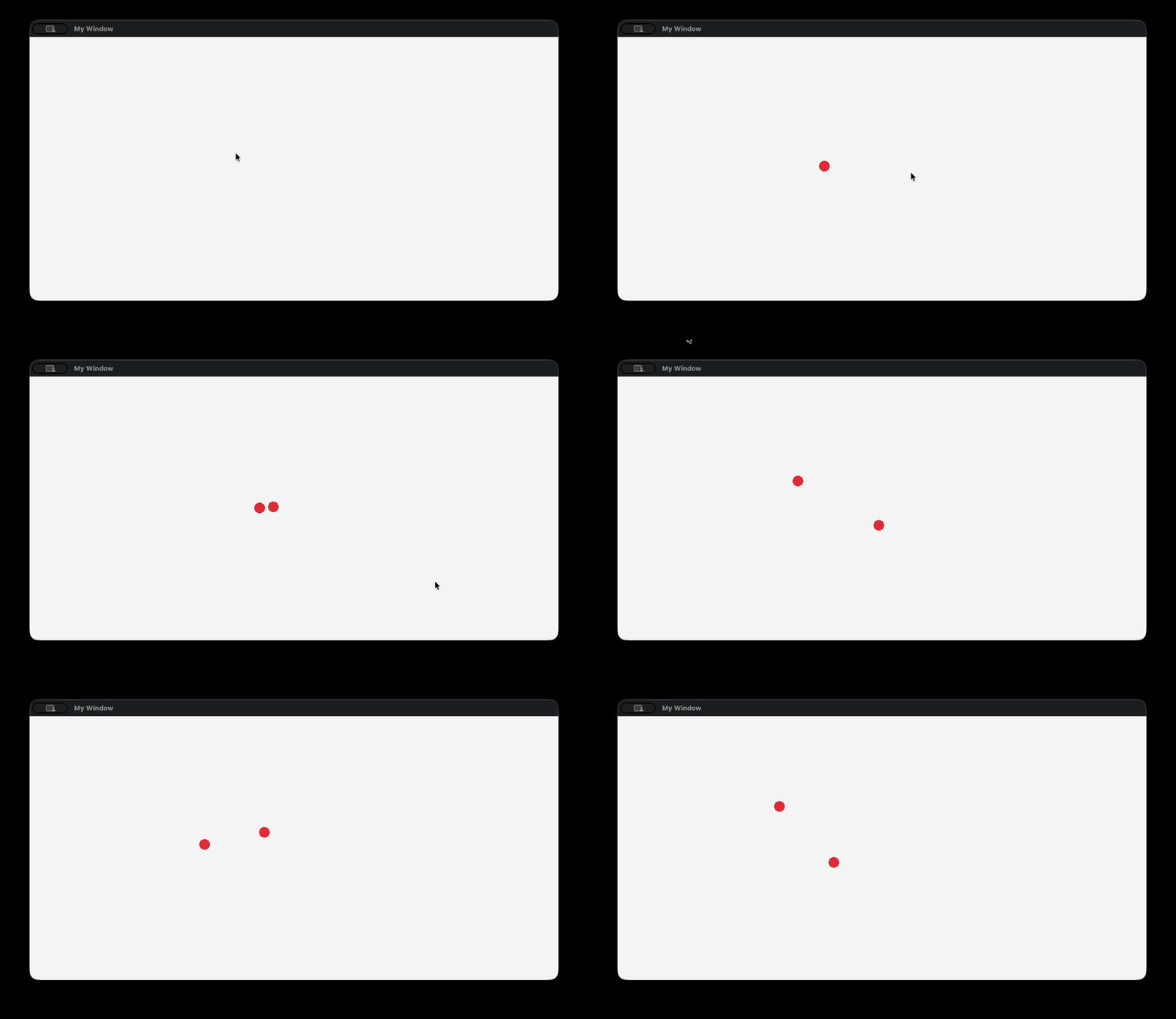
A planetary gravity simulation written in C and rendered with Raylib. Drag to launch a body and watch n-body attraction play out in real time — a fixed timestep with substeps keeps the integration stable, and a clamped frame time avoids the spiral of death. Built as an exercise in manual memory management, dynamic arrays and object handling without a framework doing the work.
The physics engine rebuilt on a real graphics pipeline — GLFW windowing, glad loader, hand-written GLSL vertex and fragment shaders, and a pannable, zoomable world-space camera.
A native iOS and iPadOS app for splitting household chores. Everything is scoped to a household, with recurring chores, per-person and per-category colours, and local notifications when something is due.
A location-based social app built with a team for CSC2033 at Newcastle. Drop a pin on the map, post to the city you're standing in, and comment on what's happening nearby.
A Flask backend for end-to-end encrypted messaging, built with a collaborator. Session store, auth guards and a route layer split into blueprints, with a pytest suite from the first commit.
A collaborative Python web app built over a hackathon weekend to support learning for users with disabilities, combining accessible educational tools with AI-assisted functionality.
05. What's Next?
I'm currently looking for placements and internships in software engineering, and my inbox is always open. Whether you've got an opportunity, a question about something I've built, or you just want to say hi — I'll do my best to get back to you.
Say Hello